
Therapies Offered
Therapy tailored specifically for you.
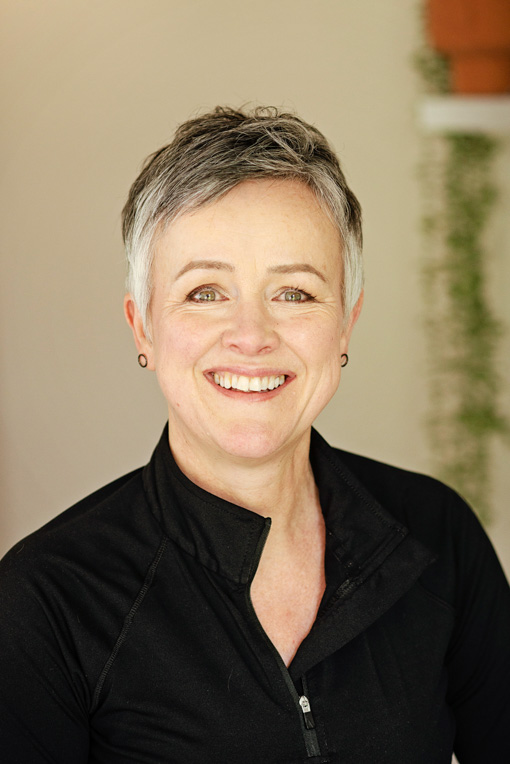
I worked as a Chartered Physiotherapist for over 25 years’ in the NHS, so have had the time and opportunity to create my own approach to rehabilitation. This involves blending clinical elements of physio with Pilates exercises. My knowledge, expertise and love of these two approaches have helped so many people become fitter, more confident and able to move without pain – often after years of suffering.
In addition to this, my training in Psychotherapy, ‘Mastery level’ in Pain Reprocessing therapy and Emotional and Awareness and Expression Therapy ( EAET ) has helped me work more deeply with people who have been struggling with their mental health alongside long-term physical conditions.
The path to recovery can be bumpy, but the destination makes the journey worth it.
I’d be excited to help you on this journey.
Please remember that, with therapy, there is no one size fits all. So I’ll be looking at tailoring the treatment specifically for you.
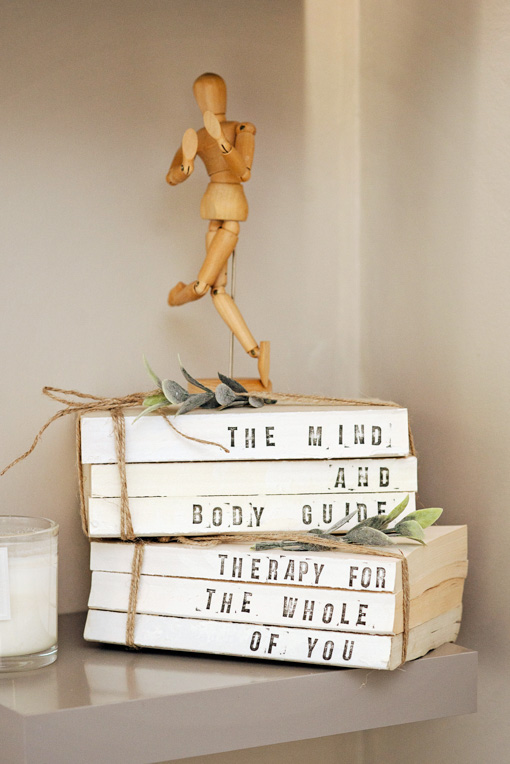
The Mind-Body Guide
Therapy for the whole of you


Pain Reprocessing Therapy
Pain Reprocessing Therapy (PRT) is a system of psychological techniques that retrains the brain to interpret and respond to signals from the body properly, subsequently breaking the cycle of chronic pain.
I am one of only a few therapsits in the UK that have trained in and are fully certified in Pain Reprocessing therapy. Its a very effective treatment for chronic neuroplastic pain and Mind-Body symptoms, especially when traditional medicine isn’t helping.
Psychotherapy
The foundation of my approach has its roots in Acceptance Commitment Therapy, (ACT).
It’s important to recognise that there is not one best form of therapy. It depends on the individual. We are all unique. I respect different approaches and the values theycan have. The approach we choose to take is agreed between us. You are involved at every stage of the therapeutic journey. Working with your strengths and resources, recognising difficulties too. Striving to be open minded and with willingness to adapt and be flexible with treatment approaches according to your needs and the strategy that has been agreed.
The heart of counselling is that a safe space is offered where you will be heard without judgement and able to speak freely, it is unlike any other relationship in this respect. I will not judge but listen and together learn about difficulties, getting to the root cause of problems and finding ways to face and solve them, leading to a happier and healthier way of living.
Physiotherapy
I have worked as a physiotherapist for over thirty years and in many different settings. Initially, I specialised in heart and lung conditions as a respiratory therapist. During this time, I concentrated on rehabilitation following major surgery and illness, working in intensive care units through to patients’ discharge from hospital. I also worked extensively with amputees. This is an emotional and challenging period for the individual as they address such dramatic changes to their life. Although difficult, I loved working closely with people and supporting them through their journey. I worked in major teaching hospitals inManchester, London and Sydney – and learnt a great deal about myself personally and professionally in these specialist roles.
I then decided on a change to expand my knowledge and skills. So I began working with those experiencing musculoskeletal problems, from issues with the spine and joints to those who’d suffered sporting injuries. Working as a clinical specialist in this area, I have helped people of all ages and walks of life. I especially enjoy helping people to feel safe exercising, while building their confidence through better movement that creates lasting change.
More recently, while working as a senior physiotherapist, I took on a specialist role in Pain Management to support people with chronic pain and disability. Working with individuals and groups in this area was the start of my psychotherapy training to better understand how our thoughts, emotions and beliefs are so closely connected to the body.
And so The Mind and Body Guide was created to help individuals devise ways to overcome difficulties – whether mental, physical or a mixture of both.
Somatic Tracking
Somatic tracking is learning to find the feelings and sensations in your body and be able watch and stay with them, a bit like watching clouds in the sky.
Often difficult at first due to avoiding uncomfortable feelings, this is where working 1:1 is helpful to guide you in a calm safe way.
Somatic tracking is a skill to learn that helps rewire and retrain the brain. It’s a key part of our work together.
Trauma informed
The Rapid Trauma Reset is a unique therapeutic approach to clearing trauma developed by studying the Neuroscience of how the brain codes and uses memories.
It is a very effective technique that we can use to work with traumatic memories and past experiences as part of our work together.
Breathwork
Understanding how breathing works, what normal breathing patterns are and how disordered breathing contributes to symptoms is essential. Armed with that knowledge, the next step is awareness. It is important that people tune in to their own body and become aware of their own breathing patterns at different times, but specifically when symptomatic. Being aware of a dysfunctional breathing pattern helps to establish a new, functional pattern.
Hypnotherapy
Some imagine hypnotherapy involves lying on a chaise lounge, head resting on a cushion while being gently guided into a dreamy state. Others might think of stage hypnotists where people in trance-like states perform silly acts.
There is a certain amount of truth to these two views of hypnotism. Sigmund Freud used chaise lounge to work with clients and it’s still a popular image of psychotherapy and hypnotherapy today.
The second view is also true, but subjects are carefully screened from a whole audience to see who are the most hypnotisable. Participants have an idea what they are getting into and do so freely.
Better to think of hypnotherapy as being in a state of highly focussed attention. What does this mean? Imagine you are watching a film. Often you find yourself completely immersed in the imaginary world. I am known in our house for doing this and my husband often chuckles as he watches my expressions mirror those of the characters on screen: when they laugh, I laugh, and when they cry, I cry. Often, I have to tell myself it’s not real!
This state can be described as hypnotic, though some will experience it more intensely than others.
Another example is when you find yourself staring at a spectacular sunset or dramatic landscape. While doing so, your awareness of other things falls away. These ‘other things could be the confines of a deck chair or the hiking shoes on your feet.
It’s like looking through a camera’s telephoto lens. You can focus in on amazing detail, without being distracted by peripheral things.
When we use hypnotherapy as therapy it gives us the opportunity to focus in and see the detail of what is going on deep in your mind, free from the interruption of everything else. It is here where we can see the detail of thoughts, memories, and feelings. And it is here where we can find, unlock, and listen to what will help you on the path to recovery.
Hypnosis is another way of learning to control how your brain processes some thoughts, like the experience of pain. It can be used alongside other therapies to help find solutions to problems.
Two thirds of adults are thought to be hypnotisable. The process is simple, relaxing and you’re able bring your attention back whenever you decide. You can’t be hypnotised against your will.
Pilates
The method I use is built on a degree-level understanding of movement, anatomy and physiology. I trained with the Australian Physiotherapy and Pilates Institute (APPI) which is widely acknowledged as a world leader in Pilates training and the form most favoured by professionally trained Physiotherapists. I use modified Pilates exercises to enable clients to embrace better movement patterns for any fitness level.
For a long time, I had appreciated that patients benefited from building up their muscle strength – and how doing so led to faster recovery and protection from future injury. I then became pregnant with twins and joined a local Pilates class to loosen and relax, as I wasn’t feeling either of these things! From attending the classes, I truly appreciated the benefits of Pilates and realised how I could use my clinical knowledge of anatomy in a slightly different way. This blend of skills enabled me to work with people to achieve a whole host of benefits that I had experienced for myself.
This led me to embark on training with the Australian Physiotherapy and Pilates Institute (APPI), which is widely acknowledged as a world leader in Pilates training and the form most favoured by professionally trained physiotherapists.Once qualified, I began to work individually with clients in my home studio on a specialist piece of equipment called a reformer. This wonderfully versatile tool can lead to excellent results – whether for rehabilitation following surgery or injury, or simply for strength training.
I have now been running group Pilates classes for the last fifteen years, and some of the clients from my first class are still with me! They provide me with honest and regular feedback, and they encouraged me to start recording sessions during the Covid pandemic so they could continue exercising with me in their homes.
This is what led to the Mood and Movement library. I love nothing more than suggestions for classes and areas for focus, from stiff and creaky knees to breathing exercises for stressful situations.
Integrative Eye Movement Therapy (IEMT)
Emotional Freedom Technique (EFT)
This therapy involves tapping on specific points around the body (in that sense, it is similar to acupuncture). EFT can create a strong sense of release. As a therapist, I might also guide you through certain movements. This, combined with the power of words and thoughts, can be highly effective in releasing buried emotions that have been holding the person back in life. EFT can lead to an ‘emotional reset’ and a wonderful feeling of calm.
Book a free, no pressure conversation for us to see if we could be a good fit working together - and for me to understand how I can help you.
helped me get through
I felt understood, valued..
Looking for tips, insights and other useful stuff?
Sign up to my weekly Mind-Body postcard and I’ll send you all the best bits from my ongoing research into the Mind-Body connection.